
Fingerboard Stories
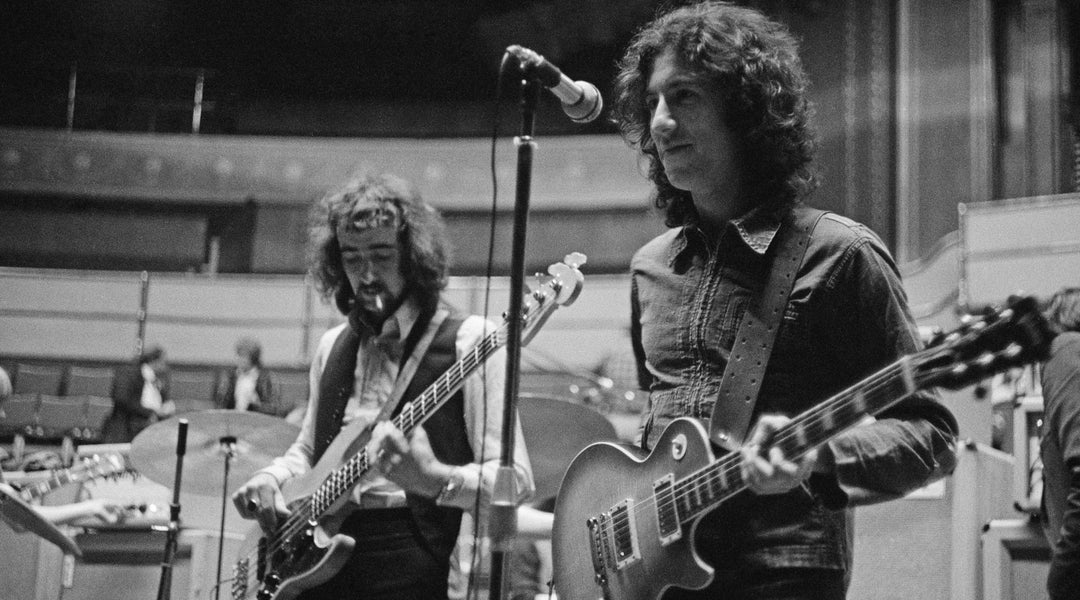
That the instrumental Albatross was a mammoth hit for Fleetwood Mac is testament to the lyrical nature of Green’s guitar playing. One of the biggest selling instrumental songs in English history, it’s the track that the Beatles wished they’d written. As Rolling Stone notes: “Its heavily reverbed guitar partially inspired the Beatles’ “Sun King.” “We said, ‘Let’s be Fleetwood Mac doing “Albatross,” just to get going,’ ” George Harrison recalled. “It never really sounded like Fleetwood Mac … but that was the point of origin.”
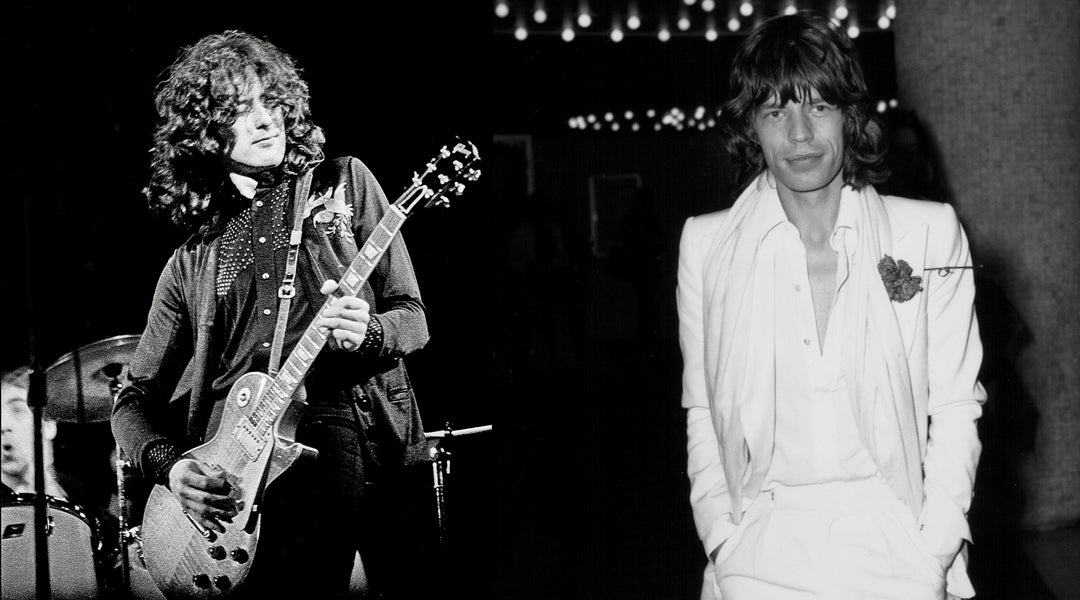
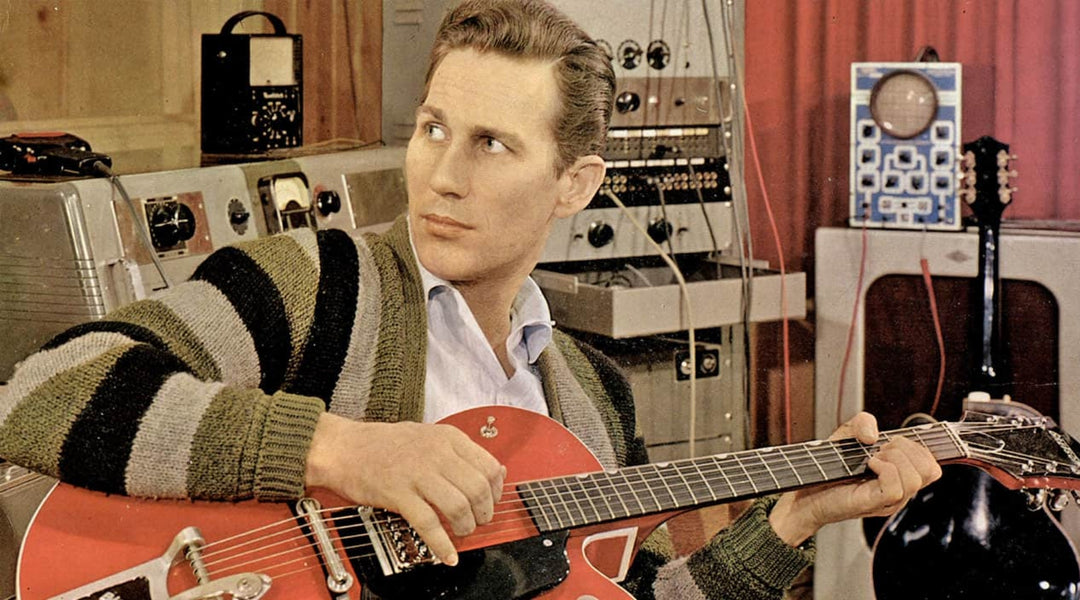
My heroes at the time were guys like Hendrix, Slash and Jimmy Page. Chet Atkins did not feature. Today, though, it would be a different story. Not only was Chet a fantastic guitar player; his sage wisdom on the subject of pickin’ was most definitely bedroom wall worthy. So, with that in mind, I’ve compiled a selection of my favorite Chet Atkins quotes for your reading pleasure. If these speak to you, then I’d heartily recommend printing some of them out and putting them up in your practice space. They’ve been motivating me these past few weeks; hopefully they’ll do the same for you.

“Jim Marshall & Son” opened in July 1960 at 76 Uxbridge Road in Hanwell, England. For the aspiring instrument seller, it was a case of right place; right time. Within a few short years, the London rock scene was burgeoning. Soon, the likes of Mitch Mitchell, Pete Townshend, Eric Clapton and John Entwistle flocked to the renamed “J & T Marshall”, by now the de-jour supplier of guitars and amplifiers for the new breed.